
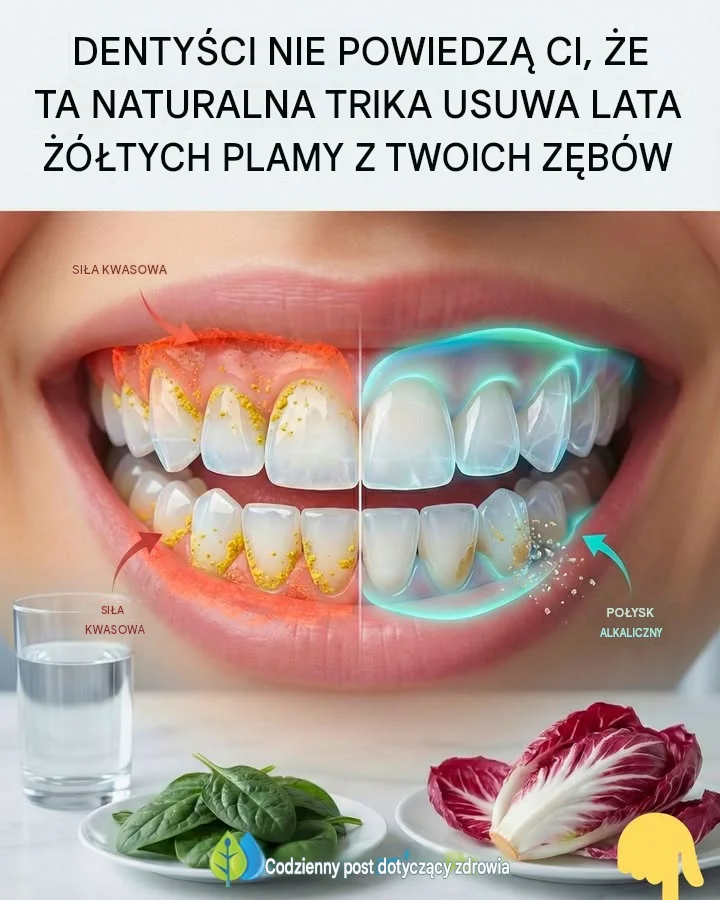
If your teeth are yellow, it’s probably not your coffee or your brushing habits. It’s a silent metabolic signal that your body is sending you. No dentist is trained to diagnose this because whitening strips don’t fix the cause; they just make your teeth weaker, more porous, and more stained over time. You’ve likely been trained to think that yellow teeth are just a cosmetic issue. So, what do you do? You attack the surface. You scrub harder, you bleach stronger, and in doing so, you strip your enamel even more, making it thinner. But what if the yellowing isn’t coming from the outside at all?
Your teeth are porous, like a hard, stone-like sponge. From the outside, they look solid, but on the inside, they are full of microscopic holes. Just like a sponge, your teeth absorb liquids and can hold on to colors. Once something soaks in, it’s incredibly difficult to get it out. This is where your internal health comes into play. Your enamel responds directly to the pH of your saliva, and your saliva’s pH reflects your gut health, your liver health, and your overall metabolic health. When your saliva becomes acidic, stains bind more easily, the enamel weakens faster, and any whitening you do becomes temporary. This isn’t about laziness or poor hygiene; it’s about biology. Your mouth is the frontline of your internal health, and it’s time to stop treating the symptom and start addressing the source. (Based on the insights of Ben Azadi, metabolic health expert)
Key Takeaways
- Yellow teeth are a metabolic signal: They often indicate internal issues like acidic saliva, gut dysbiosis, or liver congestion, not just surface stains.
- Whitening strips can cause damage: They weaken tooth enamel, increase porosity, and can lead to a rebound effect where teeth become even more stained over time.
- Natural protocols work on the root cause: A combination of gentle external cleaning (baking soda and charcoal), oral detoxification (oil pulling), and internal support can create lasting whiteness.
- Saliva pH is crucial: Balancing your saliva’s pH through diet is the key to preventing stains from sticking. This involves eating more alkaline-forming foods and avoiding acidic ones.
- Your smile reflects your internal health: A healthy mouth with naturally white teeth is a sign of a balanced body.
1. Why Your Whitening Routine Keeps Failing
Have you ever wondered why, no matter how much you whiten, your teeth just keep turning yellow again? It’s because you’re fighting a biochemical imbalance with a surface-level solution. This is not a surface stain; it’s an internal problem manifesting externally. Ask yourself these questions: Do your teeth yellow evenly or mostly near the gum line? Do you build up plaque no matter how well you brush? Are your gums inflamed or do they bleed when you floss? Do you wake up with a dry mouth or deal with reflux and bloating? If you said yes to any of these, your mouth is waving a huge red flag.
Common internal triggers that dentists rarely address include acid reflux (even silent GERD), liver congestion, gut dysbiosis, mineral deficiencies, chronic dehydration, and high levels of inflammation. When your body is dealing with these issues, your saliva becomes more acidic. This acidic environment doesn’t just invite stains; it actively erodes your crystalline tooth enamel. Research shows that acidic oral environments accelerate enamel erosion and that low saliva buffering capacity increases discoloration. You’re trapped in a cycle: you whiten your teeth, which makes them weaker and more porous, which in turn makes them stain even more easily. It’s a brilliant business model, but it’s not healthcare.
2. The Hidden Dangers of Whitening Strips
Let’s be clear about what whitening strips actually do. The bleaching agents in them work by oxidizing stains, but they also oxidize the proteins within your enamel. This means the bleach doesn’t just remove stains; it fundamentally changes the structure of your tooth. Think of it like over-bleaching your hair. You might get a bright color temporarily, but you’ve destroyed the structure, leaving it brittle and damaged.
Here’s what most dentists won’t say out loud: whitening strips strip the enamel, increase tooth sensitivity, disrupt your oral microbiome, and increase the porosity (the tiny holes) in your teeth. This all leads to what’s known as “rebound staining.” Because your teeth are now more porous, they absorb stains from food and drink even faster than before. This creates a vicious cycle where you feel the need to whiten more and more often, causing further damage each time. You’re essentially subscribing to a lifetime of sensitive, weak, and chronically yellow teeth.
CIĄG DALSZY NA NASTĘPNEJ STRONIE
Dalszy ciąg na następnej stronie
